

 WordPress & YOOtheme Pro
 WooCommerce Development
 Website Planning
 Website Ownership & Access
 Website Support & Growth
 Website Launch Checklist
Business Listings & Directories: Be Present Where Your Business Belongs
A useful business listing helps someone find, understand, or verify your company. It should describe the real business, appear in an appropriate category, and provide a working route to the correct website or contact details.
The goal is not to register a company on every directory that accepts a submission. It is to select places that make sense for the business and maintain information customers can rely on.
A local service business, an online store, and a software product may need very different profiles. Start with that distinction before buying a listing package or completing a bulk submission form.
A citation, a profile, and a backlink are different things
Distinguish identifying information, a profile, and a link
In local marketing, a citation generally refers to an online mention of identifying business information, often the name, address, and phone number. A directory profile can contain that information plus categories, descriptions, images, and contact options. A backlink is the actual link from another page to your website.
A profile may be useful even if its link is qualified or it contains no website link at all. Conversely, a clickable link does not make an otherwise irrelevant directory worth joining.
Judge a listing by the customer task it supports
For this reason, judge a listing by what it helps a potential customer do. Can they confirm that the business serves their need? Do the details agree with the company’s website? Can they contact the right person or reach the correct page?
This is one part of Link Building & Content Placement, with a specific task: selecting and maintaining accurate business profiles.
Start with your actual business model
Match eligibility to the real business model
A company that serves customers in person has different eligibility from one that works entirely online. An online business targeting US customers does not automatically have a US storefront, service area, or office.
For Google Business Profile, eligibility generally requires in-person contact with customers; online-only businesses are not eligible. Check the official Google eligibility guidance before treating a profile as a standard deliverable.
Choose suitable platforms without inventing a physical presence
Do not invent an address or claim an office simply to fit a listing form. If a directory’s requirements do not match the business, choose another appropriate opportunity. A real service area, a mailing address, and a customer-facing location are not interchangeable descriptions.
| Business situation | Types of listings to investigate | What requires particular care |
|---|---|---|
| Customers visit a real location | Relevant local, regional, industry, and eligible map profiles | Address, hours, categories, and location-specific contact details |
| The business visits customers | Eligible service-area profiles and relevant trade directories | Actual service area and each platform’s address-display rules |
| Services are delivered entirely online | Industry directories, professional profiles, and suitable business platforms | Online-business eligibility and accurate market coverage |
| Software or a digital product | Relevant software and product directories | Product category, availability, features, and links to the correct product |
| An online store | Suitable industry or merchant directories | Store description, contact details, and any marketplace conditions |
These are candidate categories, not a universal submission list. Check each platform’s current requirements before committing.

Select directories by relevance and usability
Inspect category relevance and profile usability
Search as a potential buyer. Can you find businesses of the right type? Are categories understandable? Do profiles contain enough information to make a comparison? Does the directory appear to maintain its content and provide a way to correct errors?
Look for a connection to the industry, locality, professional community, or product category. A narrowly relevant directory may be more useful than a generic site promising thousands of business listings with no clear audience.
Inspect the actual profile pages. Some directory homepages look polished while individual listings are difficult to find or filled with incomplete information. Test the search, category navigation, website link, and contact path on a phone.
Identify what a paid plan actually provides
If a directory sells a premium plan, identify what the fee buys: a fuller profile, a category position, leads, advertising, or another feature. A paid membership and a paid link are not automatically the same offer. Understand the actual arrangement and apply appropriate commercial treatment where relevant.
Google specifically lists low-quality directory or bookmark links among link-spam examples. That is a reason to avoid indiscriminate submission for ranking manipulation, not a reason to treat every business directory as unsuitable. See Google’s link-spam policy.
For a more detailed site assessment, use the publisher quality guide and adapt its questions to profile pages rather than articles.
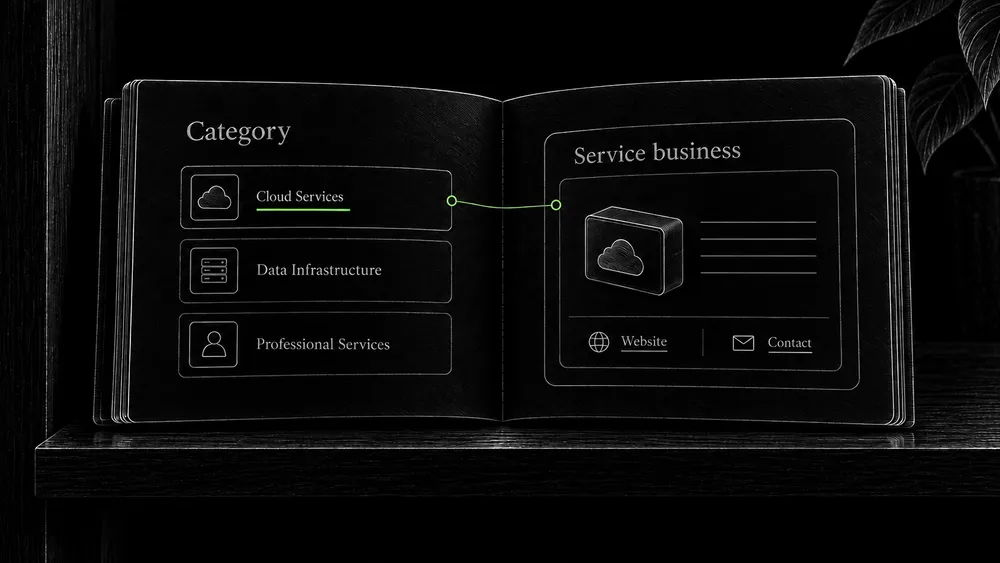
Build one approved business information record
Create an owner-approved business information record
Before creating profiles, assemble a factual reference the owner has checked. This prevents different people from improvising business details on different platforms.
Public business name:
Relevant legal or trading name, where required:
Website and preferred profile destination:
Public contact phone and email:
Real customer-facing location, if any:
Actual service area or markets served:
Hours and contact availability, where applicable:
Main category and secondary categories:
Short factual description:
Services or products currently available:
Approved logo, images, and supporting materials:
Account owner and update contact:
Adapt descriptions while keeping the facts stable
Consistency means avoiding conflicting facts. Minor formatting differences are not the same problem as an old phone number, a wrong address, or a category describing a service you do not provide.
Adapt descriptions to the platform’s fields and readers while keeping the facts stable. A software directory may need product capabilities; a professional directory may emphasize service scope. Copying the same awkward paragraph into every field is less useful than answering what that particular profile asks.
Do not add locations, qualifications, awards, or customer claims that the company cannot support. AI can help shorten or organize the description, but the owner should confirm the underlying information.
Search for an existing profile before creating a new one
Find existing entries and use claim or correction procedures
Search the platform for the business name, website, phone number, and previous names where relevant. A profile may already exist because of an earlier submission, a data source, or a previous provider’s work.
If an accurate profile exists, use the platform’s claim or ownership process. If an incorrect or duplicate profile exists, investigate the correction procedure. Creating another entry may leave customers with several contradictory versions of the business.
Distinguish real locations and record the submission state
For a company with several genuine locations, establish which profile belongs to which location and follow the platform’s rules. Do not remove a legitimate location profile merely because it shares the company name.
Keep a record of what you found and what action you took. “Submitted” means a request was sent; it does not mean the profile is approved, publicly visible, or under the client’s control.
Register accounts for the business
Keep account ownership and verification with the business
Where possible, use an account owned by the client from the beginning. Use role-based access for a helper where the platform supports it. Keep recovery information and verification under the business’s control.
Verification may require the owner’s participation. Explain the needed action without asking them to disclose passwords through an ordinary inquiry form. Some steps cannot honestly be promised as entirely hands-off because the platform may require proof or direct confirmation.
Document profile status, terms, and secure access handover
The handover should include the public profile URL, account owner, relevant platform contact or support route, status, subscription terms, and unresolved issues. Secure access details belong in a suitable access-transfer process, not in a public spreadsheet.
These principles follow the same approach as website ownership and handover: the client should be able to continue with another provider without losing control of the business’s accounts.
Verify what actually became public
Test public profile information and the contact path
After approval, inspect the live profile as a visitor. Confirm the business name, category, description, website destination, contact details, images, and location or service-area information where applicable.
Click the website link. Check that it reaches the intended page and does not lead to an outdated domain, a broken page, or a different location. Test any included contact route within the platform where appropriate.
Report usable profiles separately from pending submissions
A listing report should distinguish:
- Found but not claimed.
- Claim or submission pending.
- Live and checked.
- Correction requested.
- Rejected or ineligible.
- Duplicate under review.
- Closed or intentionally discontinued.
A report with fifty submitted URLs may contain far fewer usable profiles. Status distinctions make the work understandable and expose what still needs attention.
Decide whether a paid listing should be renewed
Review paid features and the meaning of reported leads
Before renewal, review the actual benefit and the conditions. Are there useful visits or inquiries? Is the profile important for customers verifying the business? Are paid features used? Has the audience or category changed?
If the platform provides lead data, establish what counts as a lead. A profile view, a website click, a message, and a qualified inquiry are different events. Do not compare those numbers as if they describe the same outcome.
Compare renewal conditions with the continuing business value
Check renewal dates, cancellation terms, and what remains visible if the paid plan ends. Those details vary by provider; save the terms associated with the actual purchase rather than relying on a general expectation.
An absence of recorded leads may justify investigation or cancellation. It should not be hidden behind a count of backlinks. The continuing cost needs a business reason.

Maintain profiles when the business changes
Update important changes at the source and then work through your listing register. A new phone number, domain, service area, or business name can affect several profiles at once.
Assign an owner to the update. If maintenance is not part of an ongoing agreement, the business should receive the register and understand which profiles may need attention later. Do not imply that someone will continue checking indefinitely after handover.
The backlink monitoring guide covers link-state records. Directory maintenance also includes factual information and account status, even when the website link itself remains intact.
Frequently asked questions
Do online-only companies need a Google Business Profile?
Online-only businesses do not meet the eligibility described in Google’s guidance above. Focus on platforms appropriate to the real business model. Serving US customers remotely does not create a local physical presence.
How many directories should I submit to?
Use the number of suitable, verifiable opportunities as the boundary. There is no useful target that applies equally to a local business, an international service provider, and a software product. A smaller accurate presence is easier to own and maintain.
Should every directory description be completely different?
Keep facts consistent and adapt the explanation to the platform’s audience and fields. Do not invent different services or locations to make descriptions unique. Clear, accurate information matters more than rewriting every sentence for its own sake.
Can I use a profile that already exists?
Usually the first step is to investigate the platform’s claim or correction process. Confirm that the profile actually represents your business. Avoid creating a competing duplicate simply because the original entry is inconvenient to access.
Is a paid directory automatically better than a free one?
No. Compare the audience, eligibility, public profile, features, terms, and cost. A free relevant profile may be useful, while an expensive listing may offer little for your business. Evaluate the specific purchase.
Who owns the accounts after setup?
The business should control accounts created for it wherever the platform allows that arrangement. Keep a clear record of ownership, recovery, and delegated access. Any platform-specific limitations should be explained before work begins.
Organize the listings that fit your business
Describe your business model, where you actually operate, and any profiles already in use. We can start with eligibility, accuracy, and suitable opportunities rather than a bulk submission count.