

 WordPress & YOOtheme Pro
 WooCommerce Development
 Website Planning
 Website Ownership & Access
 Website Support & Growth
 Website Launch Checklist
Local SEO: Help Nearby Customers Find and Choose Your Business
Local SEO connects what your business actually does, where it operates, and the information people need before contacting it. A useful local presence combines accurate business details, an appropriate Google Business Profile, a website that answers customer questions, and a working path to an inquiry or visit.
The objective is not simply to appear beside a city name. It is to help the right person recognize that you can serve them and understand what to do next. Someone finding an outdated address or a vague service page may leave even when the business is visible.
This guide explains the whole process, including what to prepare first, where a separate page is justified, and how to distinguish a completed setup from ongoing work. You can use it to organize your own local presence or define implementation help.

Begin with how the business serves customers
Identify where and how customers receive the service
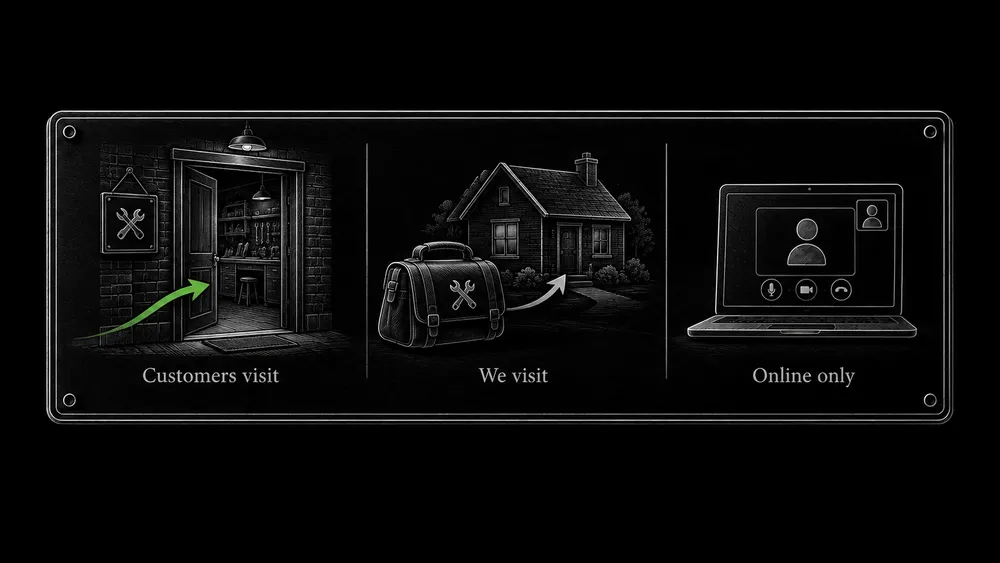
Establish the actual operating model before choosing profile settings or planning city pages. Do customers visit you, do you visit them, or does the service take place entirely online? Are there several real locations, or one business serving a wider area?
Google Business Profile is generally intended for businesses with in-person customer contact. An official mailing address alone does not establish eligibility, and an online-only business should not invent a local office. Google’s eligibility overview.
Record the business facts that guide local setup
This distinction does not prevent an online business from building a useful website or targeting an audience. It changes which local features and claims are appropriate. A company serving US customers remotely is not automatically a local business in every US city.
Create a factual starting note: current services, actual locations, service coverage, customer contact method, hours where applicable, and the person responsible for updates. Use it across the project so the website and profiles describe the same operation.
Understand the jobs of the profile and website
A profile can help someone identify a business quickly. The website can explain the service in depth, including suitability, process, limitations, and preparation. Treat them as connected parts of the customer journey.
| Customer question | Where the answer belongs |
|---|---|
| Is this the business I am looking for? | Consistent name, category, contact details, and branding |
| Can I visit, and when? | Accurate profile information and a useful location page |
| Does the business serve my area? | Clear coverage information without an invented branch |
| Is this service appropriate for my problem? | A substantive service page with conditions and scope |
| What should I prepare before contacting you? | Practical website content near the inquiry route |
| Can I trust what is being claimed? | Real business information, appropriate evidence, and genuine customer feedback |
| How do I take the next step? | A working call, booking, directions, or form route appropriate to the business |
Do not make the profile carry the entire explanation. Equally, do not leave basic contact facts inconsistent because the website contains a fuller description.
Know which parts of local visibility you can influence
Google describes local ranking through relevance, distance, and prominence. Complete information helps it understand the business, but owners cannot pay Google for a better local ranking. A setup does not remove the effect of the searcher’s location. Google’s local ranking guidance.
Use those principles to set realistic expectations. You can improve accuracy, clarify services, publish useful pages, and make it easier for real customers to respond. You cannot turn a business into a nearby provider everywhere by adding more city names.
A useful plan concentrates on identifiable problems and actual demand. It does not promise a permanent map position or a fixed number of leads from filling out a profile.
Build the Google Business Profile around verified facts
Find the correct profile and prepare accurate details
First determine whether an existing profile represents the business. Creating a second version can leave customers with conflicting information and complicate ownership. Establish the correct profile and who controls it before changing details.
Prepare the name, category, location or service-area arrangement, contact information, opening hours where applicable, services, and appropriate photographs. Distinguish a submitted change from an approved and checked public result.
Keep profile ownership with the business
The owner should retain control of the business account, with delegated access for implementation where appropriate. Verification may require the owner’s participation; it should not be sold as a guaranteed background action that never involves the business.
The Google Business Profile setup guide develops eligibility, ownership, preparation, verification, and public checks in detail.
Make the website answer the buyer’s real questions
Explain service scope and useful local conditions
A page that repeats “professional service in your city” does not explain much. Describe what the service includes, who it suits, what changes the scope, and how the customer can proceed.
Local detail is useful when it affects the decision. That may include where appointments take place, whether the team travels, how coverage is confirmed, or which contact route belongs to a location. Unrelated city history is unlikely to resolve a customer’s uncertainty about the service.
Build local content from owner-confirmed information
Gather facts from the owner rather than expecting them to write finished copy. Ask what customers often misunderstand, what information is needed before a quote, and which jobs the business does not accept. Use available documentation and media to support the explanation.
For a new website, this fits the complete website development process: research, structure, content, implementation, and launch belong together. For the local editorial work itself, use Local Business Website Content.
Choose location pages according to distinct customer needs
Identify when geography justifies a separate page
Several real premises may need separate pages because directions, contact details, hours, staff, or services differ. A service-area business may also need to explain how work is delivered in particular areas. Neither situation justifies automatically generating every city-and-service combination.
Ask whether the proposed page provides an independent useful answer. If the only change is a place name, a clear coverage section may serve the reader better. If the location changes the practical information, a dedicated page can have a genuine purpose.
Describe coverage without implying a branch
Keep the distinction between a branch and an area served visible. A page describing coverage should not imply a customer-facing office that does not exist.
The location and service-area page guide provides a split-or-combine decision process and an evidence checklist for writing those pages.
Keep business information consistent where customers find it
Prioritize conflicting contact details and destinations
A correct profile can coexist with an old directory entry, an outdated contact page, or a broken link from a local organization. Review the places that matter to customers and record conflicting facts.
Prioritize errors that cause actual confusion: wrong phone numbers, old addresses, misleading hours, and destinations that no longer work. Do not spend the entire effort standardizing harmless punctuation while leaving a disconnected phone number online.
Maintain an approved information record
Use an approved business-information record and a change log. When the business moves or changes its contact details, work through the relevant profiles systematically instead of relying on memory.
Local Citations & Business Information focuses on that accuracy and maintenance task. The broader directory selection guide covers choosing suitable platforms for different business models.

Build a genuine feedback process
Reviews help prospective customers understand other people’s experiences. The business needs a repeatable way to invite honest feedback and a responsible person to handle replies or concerns.
A useful process defines when to ask, how to make the request convenient, and who responds. It should not depend on purchasing praise, writing customers’ experiences for them, or sending only satisfied customers to the public review page.
Treat feedback as information about the service, not just a rating to increase. Repeated confusion about appointment preparation, availability, or pricing may reveal something to improve in the website or operation.
The customer review guide explains requests, responses, complaints, and policy boundaries. Reading the method does not mean ongoing review management is automatically included in a website project.
Check the complete contact journey
Check the route from profile to service and contact
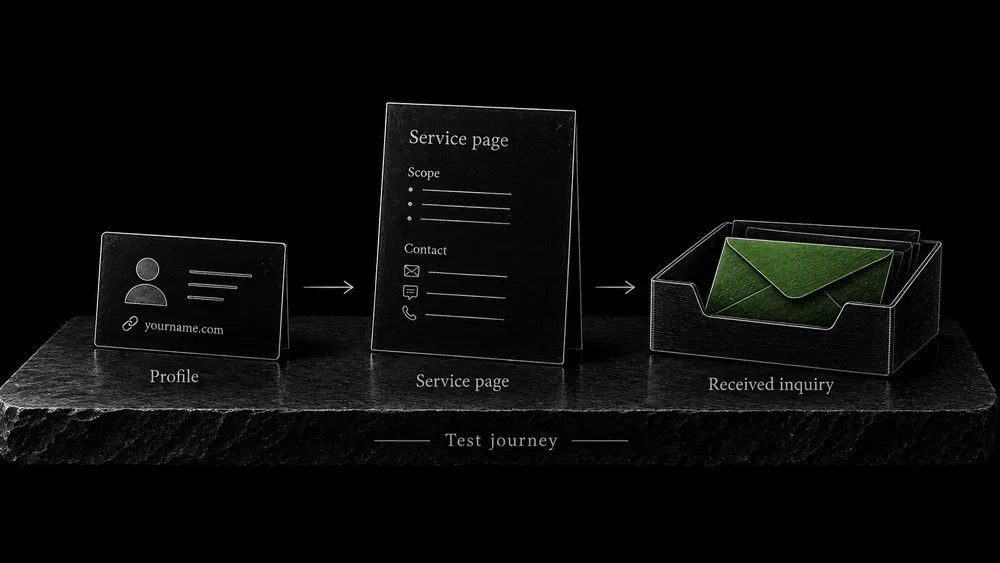
Follow the path as a customer. Open the public profile, visit its website destination, read the relevant service explanation, and use the appropriate contact route.
For a location, verify that directions and the page describe the real arrival point. For a service-area business, check whether the visitor can establish coverage before investing time in a long form. For any business, test that an inquiry reaches the responsible person.
Verify inquiry delivery beyond visible button actions
A click on a phone button and a completed conversation are different events. A form success message and a received request are also different. Use the website launch checklist to test delivery rather than assuming that visible controls work.
Keep initial forms simple. The business may need a service type and general area to judge suitability, but it should not request unnecessary private information before explaining the next step.
Measure the result at several levels
Separate visibility, inquiries, and business outcomes
Record the initial condition and changes made. Then distinguish visibility, profile actions, website visits, relevant inquiries, and agreed work.
A report full of views may conceal a broken destination. A rise in inquiries may reflect seasonality or another campaign as well as the local work. Review the evidence with enough context to make a sensible next decision.
Use inquiry quality to guide local improvements
For a small business, a clear inquiry log can add practical value to analytics: what the customer needed, whether the area was served, and whether the request was suitable. Avoid turning this into a public collection of customer details.
Local SEO Measurement explains platform metrics, observation conditions, and how to connect reporting with operational decisions.
Put the first release in a practical order
| Priority | Result to establish |
|---|---|
| Business facts and eligibility | A truthful scope and appropriate profile plan |
| Ownership and existing-profile review | The correct record and a client-controlled access route |
| Core website content | A customer can understand the service and geographic fit |
| Profile preparation and verification | Submitted, pending, and confirmed states are documented |
| Contact and public-information checks | The customer journey works and important details agree |
| Measurement and handover | Someone knows what to review and who handles changes |
Expand after the foundation exists. New location pages, further local references, and more detailed guides should follow real needs. A small coherent first release is more useful than a large set of unfinished pages.
What help can be included
Theo has set up Google Business Profiles and builds content-rich websites from the ground up. For a suitable local business, profile preparation can be discussed alongside the website, content, infrastructure, and launch work.
Define the implementation scope explicitly. A setup, an existing-profile review, content development, and continuing observation are different tasks. Review responses, ongoing local promotion, or complex ownership disputes should not be assumed to be included simply because this guide explains them.
The owner supplies and confirms the business facts and takes part in verification where required. The delivered records should make future maintenance understandable whether you continue working together or appoint another provider.
Frequently asked questions
Is Local SEO the same as Google Ads?
No. This guide concerns local presence, useful website content, business information, and organic discovery. Advertising has a separate scope and budget. Do not combine the two in a report without making that distinction visible.
Is a Google Business Profile enough without a website?
A profile can provide basic business information, but a website gives you room to explain services, conditions, and preparation in depth. The right scope depends on what customers need to understand before contacting you.
Does a registered address guarantee eligibility?
No. The real operating model matters. Use the eligibility guidance and distinguish customer-facing premises, service-area operations, and online-only work before planning a profile.
Do I need a page for every nearby city?
No. Create a dedicated page when it has a distinct useful purpose supported by real information. Otherwise, a clear coverage explanation can be more helpful and easier to maintain.
Can a new business begin without many reviews?
Yes. Start with accurate information, a clear service explanation, and working contact routes. Establish an honest feedback process as real customer experiences accumulate. Do not manufacture a history the business does not have.
Does setup guarantee a top position on Maps?
No. Completion is something that can be checked against an agreed scope. Ranking and customer response are separate outcomes. Treat them as observations rather than guaranteed deliverables.
What happens after the website and profile are handed over?
Assign responsibility for factual updates, access, inquiries, and any continuing review. The owner should receive the relevant records. Ongoing access or monitoring continues only as part of an agreed arrangement.
Connect your local presence with a useful website
Describe what your business does, how customers receive the service, and where you actually operate. Include the existing website or profile if available. That is enough to begin defining an appropriate project.