

 WordPress & YOOtheme Pro
 WooCommerce Development
 Website Planning
 Website Ownership & Access
 Website Support & Growth
 Website Launch Checklist
Local Business Website Content: Help People Decide Before They Contact You
Local content should explain whether a business can solve the customer’s problem in the place and circumstances that matter to them. Mentioning a city is only a small part of that answer.
A person may need to know whether you travel to their address, whether an appointment is required, what is included, and what information you need before quoting. If the page leaves those questions open, visitors may contact the wrong provider or abandon the search altogether.
This guide focuses on the substance of local business pages. The Local SEO hub connects that content with profiles, business information, reviews, and measurement.
Start with the decision the customer must make
Map customer decisions to the facts a service page needs
For each core service, identify the questions that determine suitability. Separate them from facts that merely describe the company.
| Customer decision | Information the page should provide |
|---|---|
| Is this the service I need? | The problem addressed, scope, and exclusions |
| Can this business serve me? | Real coverage and how uncertain locations are checked |
| Can I visit or do you come to me? | The actual delivery model and appointment process |
| What affects the quote? | Relevant scope variables and information needed for assessment |
| What must I prepare? | Documents, measurements, access, or other details genuinely required |
| What happens after I inquire? | The next step and responsible contact route |
| Why should I trust the explanation? | Accurate identity, supported experience, and relevant evidence |
Explain operational differences and service limitations
The answers will differ by business. Do not fill every page with the same generic promises about quality, reliability, and customer satisfaction. Ask what those promises mean operationally.
A useful service explanation may include limitations. Declining unsuitable work clearly can save time for both the business and the reader.
Interview the owner for facts rather than finished copy
Collect service facts through a focused owner interview
The owner does not need to produce polished marketing text. Ask them to explain a typical inquiry and the decisions that follow it.
Useful prompts include:
- What do customers often ask before they understand the service?
- Which jobs are appropriate, and which do you decline?
- What information changes the scope or quote?
- Where can the business realistically work?
- What must happen before an appointment is confirmed?
- Which claims can be supported with documents or actual work materials?
- What has changed recently that older online information may misstate?
Keep missing facts separate from publishable claims
Record unresolved questions separately. Do not allow an AI draft to convert a missing answer into a confident service promise. Use the content brief workflow to organize owner review.
Available photos, videos, and documents can improve the explanation. Missing material should change what you claim or illustrate, not cause you to fabricate proof of a completed job.
Give each page one primary job
Distinguish service, location, and coverage content
A local website may need service explanations, practical location information, and an overall introduction. These page types are related but not interchangeable.
A service page answers what the business does and how the customer should evaluate it. A location page explains the real experience of using a particular place. A coverage section tells a visitor whether and how service is available in their area.
Choose a section or page according to the task
Do not create separate pages for different wording of the same need unless the substance changes. The content blueprint provides the larger page register; the local task is to map real services and geography onto that structure honestly.
If a question requires only a short clarification, answer it in the relevant page. If it needs its own procedure or comparison, a spoke may be justified. Preserve a complete basic answer on the parent page.
Explain geography as a service condition
Explain visits, appointments, and service boundaries
Use location information to help the customer act. For a real premises, that may mean arrival instructions, appointment rules, accessibility information the business has verified, and the correct contact route. For a service-area business, it may mean coverage boundaries and what to do when the address is near an edge.
Do not claim an office in every area served. Use wording that distinguishes “we serve this area” from “visit our location here.” Keep the same distinction in the profile and contact page.
Describe how customers can confirm uncertain coverage
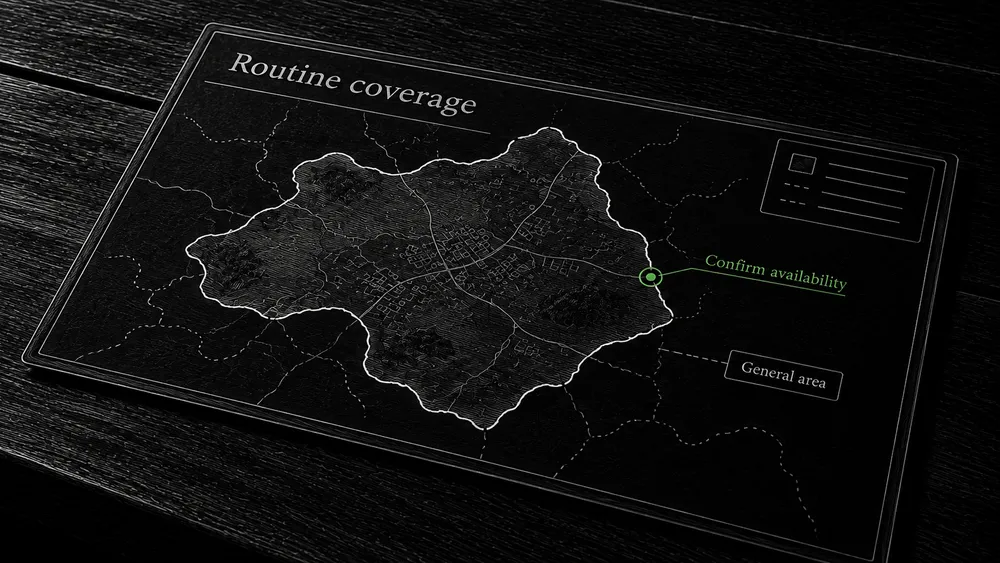
A practical coverage explanation can say which areas are routinely served, when availability needs confirmation, and what information the customer should provide. Do not publish travel-time or response-time guarantees unless the business actually supports them.
The location page guide explains when this information warrants a separate page. Avoid forcing geography into every title and sentence simply because the site targets local customers.
Make the first useful answer easy to find
Lead with suitability and develop the decision logically
Open a service page with a clear description of the work and who it suits. Let the reader recognize their situation before introducing the company’s history.
Then develop the decision in a logical order: scope, relevant conditions, process, preparation, evidence, and action. The exact order should follow the reader’s need rather than a rigid template.
Explain quote variables without inventing a price
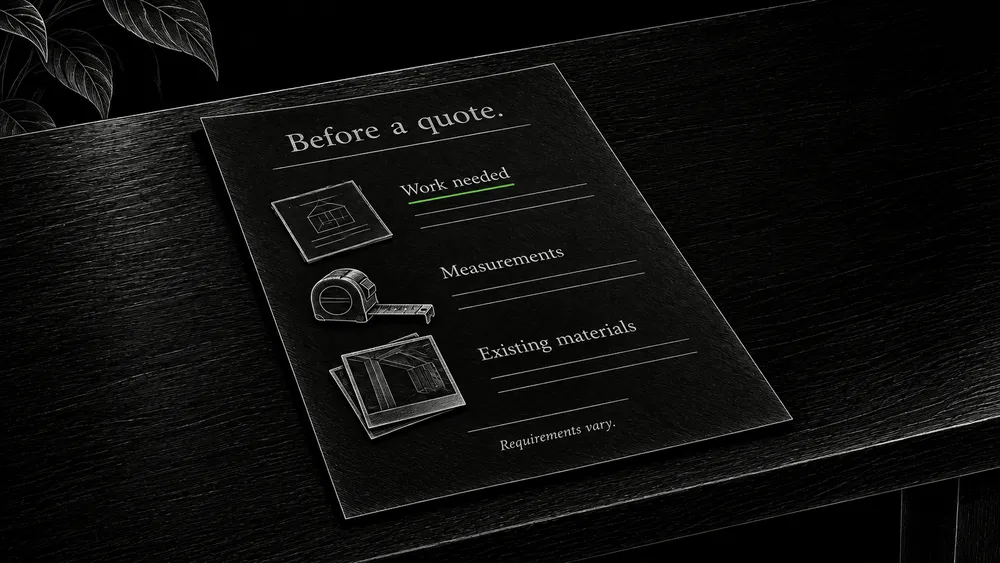
If pricing cannot be stated without assessment, explain what determines it and what is needed for a quote. That is more useful than a vague instruction to contact the business for everything. Do not invent a starting price to make the page look commercially complete.
For writing technique, use SEO Copywriting. Local relevance comes from accurate circumstances and useful answers, not simply adding place names to otherwise generic copy.
Use evidence that belongs to the real business
Use relevant business evidence with appropriate context
Choose media and supporting facts that help the customer understand the service. A real photograph of an entrance may be useful for arrival; a documented workflow can clarify what happens during a project.
Confirm permission and context before using customer material. Do not expose private documents or identifying details just because they would make the page look more convincing. An explanatory diagram can help without pretending to show a customer’s premises.
Keep testimonials and case material tied to the actual work
If the business publishes testimonials, keep them faithful to genuine feedback and distinguish them from the business’s own claims. A testimonial about one service or location should not be silently presented as proof of another.
Cases deserve their own accurate treatment when there is enough real material. This guide does not require fictional case studies or industry examples that imply work the company has never done.
Connect profile traffic to the right explanation
Choose a website destination that continues the profile journey
Think about what someone expects after clicking from the business profile. They should immediately recognize the same business and find relevant information.
If the profile represents one real location, a useful location page may provide a clearer continuation than a broad homepage. If the business has one coherent service and location, the homepage may already do the job. Judge the destination by the reader’s task.
Align business facts and link to useful next answers
Keep name, contact details, hours where applicable, and service scope aligned. The Google Business Profile guide covers the profile setup; the website needs to fulfill the expectation created there.
Use contextual links to deeper explanations. A coverage paragraph can link to a relevant area page, and a service explanation can link to preparation instructions. Do not make visitors search a large footer for the next useful step.
Make the inquiry request proportionate
Ask for enough information to assess the next step
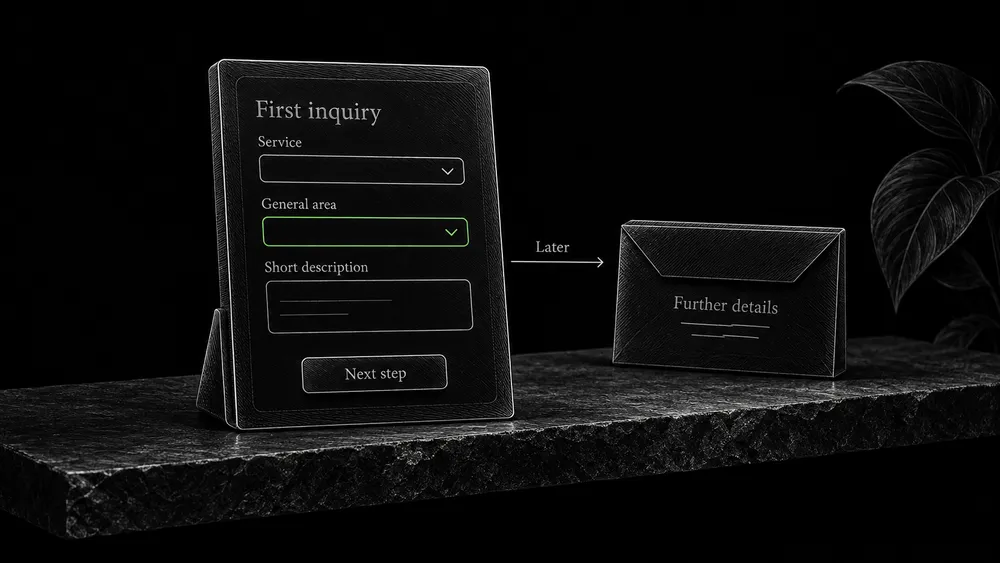
The first form should collect enough information to identify a suitable next step. A service type, general area, and short description may be more useful than a long technical questionnaire.
Ask for detailed material later when it is needed. Explain why a location or other fact is requested. Avoid collecting an exact residential address in an initial form if a ZIP code or general area is sufficient for the first decision.
Describe the agreed response process and test delivery
Tell the visitor what happens after submission using only a process the business has agreed to deliver. Do not invent a same-day response promise or automatic appointment confirmation.
Test the complete route. The launch checklist explains why a visible button or success message is not enough.
Review gaps using real inquiries
After publication, note recurring questions and unsuitable requests. They can reveal missing information, ambiguous coverage, or an offer that the page describes too broadly.
Not every repeated question requires a new article. First check whether the answer is missing, hard to find, or difficult to understand. Improve the existing explanation where appropriate.
Keep business changes synchronized. If a service is discontinued or a location changes its arrangements, update related pages and profiles together. The local business information guide provides the change-management side of that work.
This creates a useful content system that can grow from actual customer needs instead of endless speculation about adjacent topics.
Frequently asked questions
How often should I mention the city?
Use the place name when it clarifies the service or location. There is no useful universal density target. Repetition cannot replace accurate coverage, practical information, and a complete answer.
Do I need a long page for every service?
Use enough detail to help the customer decide and act. A complex service needs more explanation than a simple one. Length is a result of the task, not a target to satisfy independently.
Can the same service explanation support several locations?
Yes, where the service is genuinely the same. Keep the shared explanation coherent and add location-specific information where it changes the customer experience. Avoid creating conflicting copies of the same facts.
What if the owner has no professional photographs?
Use the accurate material available and identify useful real photos to obtain. You can explain a service with clear text and appropriate diagrams. Do not present generated images as proof of real staff, premises, or completed work.
Should I write pages about every local topic?
No. Stay within the questions that support the business’s actual offer. A page about unrelated local attractions does not automatically help a customer evaluate your service.
Can this content help readers who do not become customers?
Yes. A complete explanation can help someone assess their situation or prepare for work elsewhere. That usefulness should be part of the page itself, with an optional route to request implementation.
Build the local content your customers need
Describe the services, operating area, and questions that consume time before a suitable inquiry is clear. That material can become a structured website explanation without requiring you to write the finished copy yourself.