

 WordPress & YOOtheme Pro
 WooCommerce Development
 Website Planning
 Website Ownership & Access
 Website Support & Growth
 Website Launch Checklist
Local Citations & Business Information: Keep the Facts Consistent
A customer should not have to decide which of several phone numbers, addresses, or opening schedules represents your business today. Local citation work helps you find those conflicts, correct the important ones, and keep a record of where business information is maintained.
A citation is an online mention of identifying business information. It may appear in a directory, a local organization profile, or another public source, with or without a website link. Its practical value depends on the accuracy and usefulness of the information.
This guide focuses on auditing and updating an existing local presence. For choosing new platforms, use Business Listings & Directories. For the broader customer journey, start with Local SEO.
Establish the correct information before searching for errors
Approve current facts for each real location
Ask the owner to approve a current business record. Distinguish the public trading name, relevant location, public contact details, website destination, hours, services, and coverage.
For multiple real locations, keep separate location records linked to the same business. Do not treat a legitimate branch phone number as an inconsistency merely because it differs from the central office.
Separate public contact details from administrative facts
Also separate public information from private administrative facts. A residential address used for a verification process should not automatically be added to directories if customers do not visit there. Follow each platform’s applicable requirements.
Record who approved the facts and when. Without that reference, an audit can become a contest between conflicting sources rather than a correction process grounded in the real business.
Find the records customers may encounter
Find exact public records and preserve their URLs
Search for the current name, phone, address where public, website, and previous business details. Review relevant Maps results, directories, professional organizations, and local references already known to the owner.
Save the actual profile or page URL. A domain alone does not identify which record contains the problem. Include screenshots or notes where they help document the visible state, without copying unnecessary personal information.
Confirm which records belong to the business
Do not assume every result belongs to the same company. Compare the identity, place, contact details, and context. Similar names, former occupants, and independent businesses can appear in the same search.
The initial goal is a useful inventory, not a claim that every mention on the internet has been discovered. Mark the sources and scope inspected.
Classify the problem before choosing an action
| Observed issue | Why it matters | First action |
|---|---|---|
| Disconnected or wrong phone | Customers cannot reach the intended business | Confirm the approved number and correct high-use records |
| Old address presented as current | Customers may travel to the wrong place | Review the move history and platform update process |
| Conflicting hours | Customers cannot plan a visit reliably | Confirm current hours and exceptions |
| Wrong website destination | Readers reach an outdated or irrelevant page | Fix the destination and any affected redirects |
| Inaccurate service or category | The business receives unsuitable inquiries | Correct the scope using approved facts |
| Apparent duplicate | Customers may see conflicting versions | Establish whether both records represent the same business/location |
| Minor formatting variation | May be harmless if the meaning is unchanged | Prioritize after material factual errors |
Avoid turning every abbreviation into an emergency. “Street” and “St.” are a different issue from two different street addresses. Prioritize customer impact and the likelihood that the record is encountered.
Do not promise that correcting a particular citation will produce a ranking increase. The correction can still be valuable because it makes the business information usable and reliable.

Keep an action register
Track the correction, responsible person, and next action
Use a record that allows another person to continue the work:
Source and exact public URL:
Business/location represented:
Current incorrect or uncertain detail:
Approved replacement fact:
Customer impact and priority:
Who controls the record:
Correction method:
Request date and reference:
Status:
Public verification date:
Owner and next action:
Distinguish submitted requests from checked corrections
Useful statuses include confirmed correct, correction prepared, submitted, awaiting response, corrected and checked, unresolved, and no action needed. A submitted form is not a completed public correction.
Store credentials separately. The general register should identify the account owner and access route without exposing passwords or recovery codes.
Correct the source that can change the record
Identify who can correct each record
Some profiles are managed directly through a business account. Others require an edit request or contact with a publisher. Establish the appropriate route before repeatedly submitting changes.
If a provider indicates that its data comes from another source, investigate that relationship where practical. Do not assume updating one service will instantly correct every downstream copy. Verify the records that matter after the change.
Submit factual evidence through the appropriate route
Keep correspondence concise and factual: identify the business, exact URL, incorrect detail, correct replacement, and relevant evidence. Do not claim ownership of an unrelated record to remove it from search results.
For Google-specific control, use the Business Profile guide. Access disputes and duplicate handling should follow the appropriate platform process rather than a generic deletion instruction.
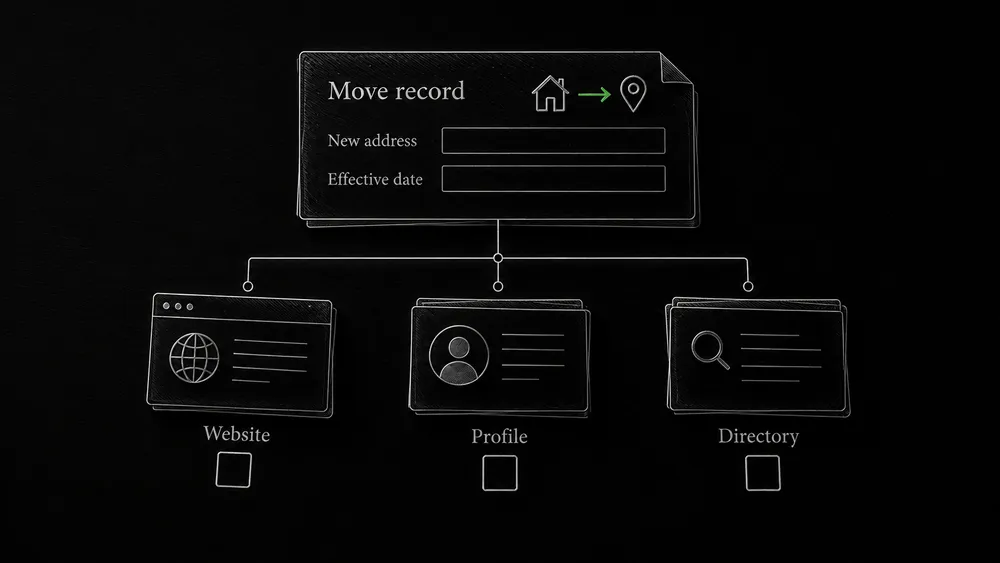
Handle a move as a coordinated change
Plan the move across website, profile, and listings
A relocation can affect the website, Google profile, external listings, directions, and customer communications. Prepare the change plan before editing individual sources.
Confirm the effective date, new customer arrangements, public address, contact continuity, and any temporary limitations. Update the website’s relevant location and contact information, then work through the prioritized register.
Check old destinations and unresolved address changes
Review whether old URLs still serve a useful purpose. A historical page or relevant redirect may be appropriate depending on the change; an unrelated destination can confuse visitors. The location page guide covers page decisions.
Check the public result after submission. Keep unresolved high-impact records visible in the register, particularly those still directing customers to the old place.
Do not mark a business permanently closed merely because one record is inconvenient to edit. Establish whether the business moved, a branch closed, or the operation genuinely ended, and use the platform’s applicable process.
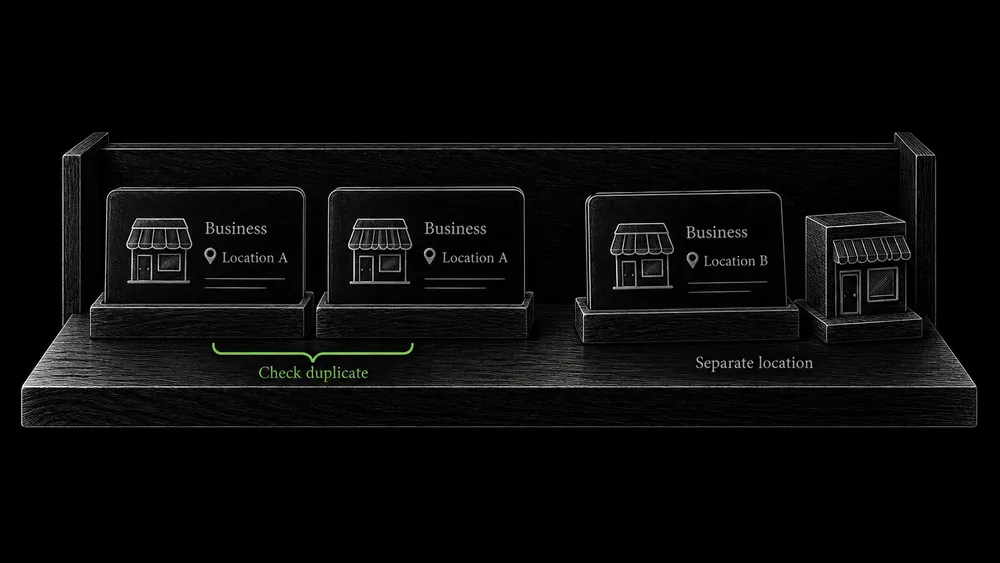
Distinguish duplicates from legitimate separate records
Two entries with similar names may represent different locations, practitioners, departments, or businesses. Determine the actual relationship before requesting removal or consolidation.
If both records represent the same operation and conflict, preserve the URLs and facts needed for the platform’s resolution process. Avoid inventing a replacement profile as a shortcut.
The desired outcome is a clear accurate representation, not the smallest possible number of records at any cost. A legitimate branch should not disappear because the central business name matches.
Add new references only when they have a purpose
After material corrections, consider whether important relevant platforms are missing. The criteria should follow audience, business model, eligibility, and profile usefulness.
A local association or industry resource can be worth investigating when it has a real connection to the business. Membership or placement does not automatically mean an endorsement, and payment should be evaluated against what is actually provided.
Use the directory selection guide for that decision. This page’s role is to keep local identity and changes accurate, rather than repeat a list of places to submit the business.
Maintain the register through business changes
Define business changes that trigger a review
Assign an update owner and identify the events that trigger a review: a move, phone change, new domain, changed hours, discontinued service, or a location opening or closing.
A review can also follow repeated customer confusion. If callers ask about a service you no longer offer, inspect the sources they may be using rather than assuming the website is the only cause.
Hand over approved facts, access ownership, and pending work
At handover, provide the approved facts, public URLs, account ownership information, pending requests, and renewal conditions where relevant. Ongoing maintenance should have a defined scope; it should not be implied indefinitely after a setup.
Frequently asked questions
Does every citation need a backlink?
No. Identifying business information can be useful without a website link. Evaluate what the record helps customers do and whether it represents the business accurately.
Must every formatting detail be identical?
Prioritize consistent meaning and correct facts. Harmless abbreviation differences are less urgent than wrong contact details or a misleading address. Do not let cosmetic work obscure operational problems.
Will one directory update fix all other listings?
Do not assume that. Some data may be shared, but you still need to verify important public records. Track the actual result rather than marking all related sources corrected automatically.
Should I delete an old record after moving?
First establish the platform’s appropriate update or move process and what the record represents. A move, closure, and duplicate are different situations. Use the action that preserves an accurate history and current customer information.
How many citations does a local business need?
There is no universal useful count. Begin with accurate records on appropriate sources customers may use. Expand where there is a clear reason and the business can maintain the information.
What can be handed to another developer later?
The approved information record, source register, access ownership details, pending requests, and update responsibilities. Keep secrets in a secure transfer process rather than the public-facing audit document.
Organize the business information people find
Share known incorrect records, previous business details where relevant, and the facts that changed. A focused review can prioritize corrections that matter to customers.