

 WordPress & YOOtheme Pro
 WooCommerce Development
 Website Planning
 Website Ownership & Access
 Website Support & Growth
 Website Launch Checklist
Local SEO Measurement: Find Out Whether Visibility Helps the Business
A useful local SEO report shows more than views and positions. It explains whether customers can find accurate information, reach the right page, contact the business, and become suitable inquiries.
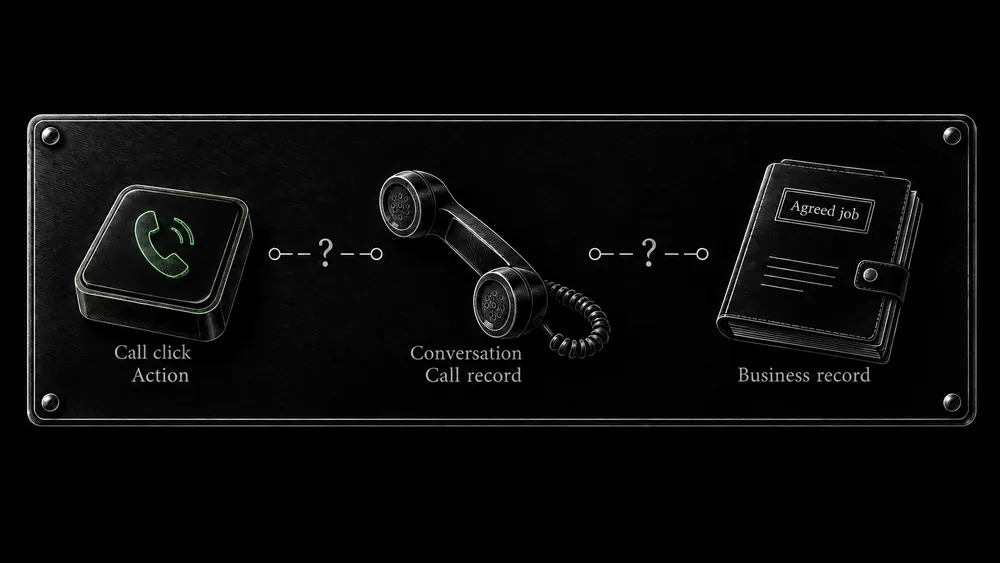
Start by defining the events you want to observe. A profile view, a website click, a call-button tap, and an agreed job are different things. They should not be combined into a single lead count.
This guide connects the work in Local SEO with a measurement process a business owner can understand. It does not assume a large analytics budget or promise complete attribution for every customer.
Record the starting condition
Save the baseline and dates of meaningful changes
Before changing the profile or website, save the known state: profile ownership and verification, main public details, relevant page URLs, contact routes, and measurement setup.
Record dates for meaningful changes. A new site launch, corrected phone number, revised coverage explanation, or changed opening schedule can affect what happens next. So can events outside the project, including seasonal demand and advertising.
Document missing history without inventing comparisons
If the business is new, there may be no historical baseline. Say that directly. Do not invent a comparison period or treat a newly available report as proof of growth from earlier work.
The Google Business Profile guide supplies setup checks, and the launch checklist supplies website delivery checks.
Read Business Profile metrics literally
Read profile actions according to their definitions
Google’s Performance documentation defines calls as clicks on the profile’s call button and website clicks as clicks on its website link. Direction requests are requests for directions, not confirmed arrivals. Available metrics depend on the business, and the report can include activity from organic results and Google Ads. Google’s metric definitions.
Match each reported result to the evidence available
Those definitions determine what you can honestly report. If the profile records a call-button action, do not describe it as an answered sales conversation unless separate evidence establishes that.
| Evidence | What it supports | What requires additional information |
|---|---|---|
| Profile views | Exposure within the report’s definition | Whether the viewer needed the service |
| Call-button clicks | An action toward calling | Connection, answer, suitability, and outcome |
| Direction requests | Interest in navigating to the location | Actual arrival and purchase |
| Website clicks | An action toward the website | Recorded session, reading behavior, and inquiry |
| Received form request | A contact reached the business | Whether it is suitable and becomes work |
| Business outcome record | An appointment, order, or agreed project | Which earlier interaction caused it |
Keep the report definition and date range with the numbers. Do not compare differently defined metrics simply because their labels look similar.
Verify the website measurement before interpreting it
Verify submissions, receipt, and recorded events
Test the forms and important actions using identifiable test data without sensitive customer information. Confirm that a successful submission reaches the intended recipient and is recorded as intended.
A click on the submit button can happen even when validation fails. A success screen can appear while delivery is broken. Your analytics implementation should match the event you intend to report.
Check profile traffic paths and attribution limits
Check the website destination from the public profile. If it redirects, confirm that it still reaches the right page and preserves any intended measurement information. Use consistent campaign tagging if it is part of the agreed analytics setup, and verify the live result rather than assume it works.
Keep profile traffic distinguishable from other website sources where the available data allows it. At the same time, recognize that missing referral information, consent choices, later return visits, and off-site contacts can limit attribution.
Connect inquiries with service and geographic fit
Classify inquiries by service fit and coverage
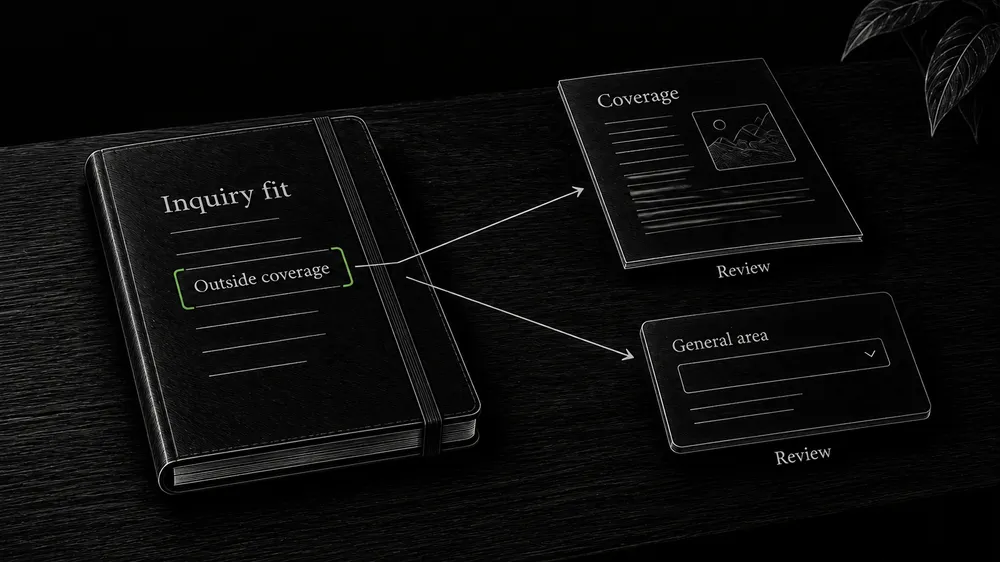
For a small business, the most useful additional record may be a simple classification of incoming requests. Did the person need a service you provide? Was the area covered? Did the inquiry reach the right team?
Track outcomes at a level appropriate to the operation: suitable inquiry, unsuitable service, outside coverage, duplicate or spam, appointment arranged, or work agreed. Keep personal details in the business’s appropriate systems rather than a public reporting sheet.
Use unsuitable requests to identify a practical problem
Repeated out-of-area requests can suggest unclear coverage. Repeated questions about a service you do not provide can suggest an inaccurate category or page description. A high number of unanswered inquiries can identify an operational problem that more traffic would only amplify.
The website content guide and location page guide provide the improvement methods for those situations.
Observe local rankings with location context
Record the location and search surface for rank observations
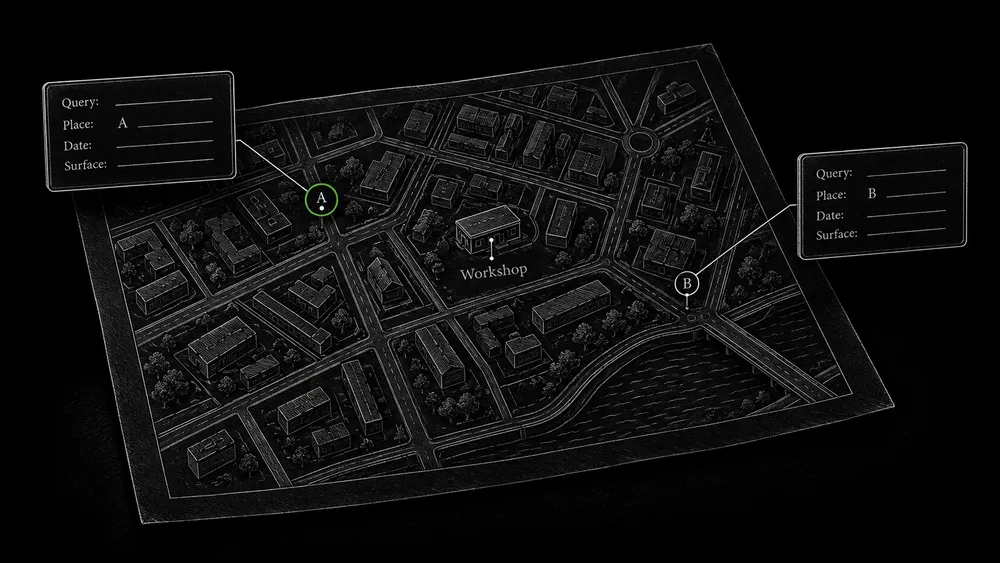
Google includes distance among the factors in local ranking. A search conducted from one place does not establish how the business appears everywhere in its service area. Google’s local ranking explanation.
If you observe results manually, record the query, date, location context, device where relevant, and whether you are looking at Maps, a local result block, or ordinary website results. Those are different surfaces.
Treat geographic rankings as samples with a defined method
A geographic rank-grid tool can organize observations from selected points. Its output remains a sample under a defined method, not proof of every customer’s experience or a substitute for inquiry data. Before adopting one, understand which surface and locations it checks.
Keep branded searches separate from unbranded service discovery. A business appearing for its own exact name answers a different question from its visibility to someone who has not chosen a provider.
Compare periods that make sense
Compare periods with seasonal and tracking context
Use comparable date ranges and note changes that could affect interpretation. Holidays, business closures, availability, weather-sensitive demand, and other promotion may influence the result depending on the business.
Avoid selecting only the dates that create the strongest increase. If the measurement setup changed, mark the break. A rise in recorded events can reflect improved tracking rather than a rise in actual customers.
Interpret metric changes without assuming causality
Likewise, a decline in views with stable suitable inquiries may not mean the project is failing. The audience or queries may have become more relevant. Investigate the relationship between the metrics instead of treating every line as a target to increase independently.
Do not assert causality from timing alone. A content improvement followed by more inquiries is an observation worth reviewing, not automatic proof that one paragraph caused the change.
Turn evidence into a practical decision
| Observation | Investigation or action |
|---|---|
| Profile information is wrong | Correct the verified factual issue first |
| People click but the destination fails | Repair the website path and repeat the test |
| Call-button activity is high but few calls are handled | Review the phone route and operational response |
| Many requests fall outside coverage | Clarify coverage and the early inquiry questions |
| Visitors repeatedly ask a question the page should answer | Improve the explanation or its visibility |
| A location’s information differs across sources | Use the local information correction register |
| Views change but suitable inquiries are stable | Examine relevance and context before changing strategy |
| There is too little data | Keep the limitation visible and use verified setup/content evidence |
The purpose of measurement is to select useful work. It should not create a habit of changing categories, rewriting pages, or purchasing more promotion every time a short-term number moves.
Keep the owner-facing report concise
Report observations, uncertainties, and the next action
Use a short explanation supported by the necessary detail:
Period and locations covered:
Data sources and limitations:

Completed work:
Public information and contact issues found:
Profile actions observed:
Website visits and confirmed inquiry events:
Suitable inquiries and business outcomes where known:

What the evidence suggests:
What remains uncertain:
Next action, responsible person, and review point:
Keep example reports and advertising activity clearly identified
This is a reporting template, not a sample of achieved results. Fill it only with observed facts and clearly identified interpretations.
If advertising is running, label its involvement. Do not present mixed activity as pure organic growth. If a platform does not provide the separation needed, state that limitation rather than estimating a confident split without evidence.
Define ownership of ongoing observation
The business should control the relevant profile and analytics accounts. A helper can receive appropriate access for the agreed work. At handover, provide the baseline, report definitions, known issues, and responsibility for future checks.
A reporting process can be simple at launch and expand when there is a reason. Do not imply daily monitoring, call recording, CRM integration, or an automated local ranking service unless those items have actually been agreed and implemented.
The website support and growth guide explains how continuing work can be scoped separately from the initial build.
Frequently asked questions
Does the Calls metric show answered calls?
It represents call-button clicks under Google’s stated definition. Use separate appropriate records if you need to know whether a conversation occurred and what happened afterward.
Do direction requests prove store visits?
No. They show a navigation-related action. Confirmed visits or purchases require other evidence, and not every request will lead to an arrival.
Can I report all profile interactions as organic leads?
No. Interactions are not all leads, and Google’s documentation says performance data can include advertising activity. Preserve both distinctions in the report.
Is a ranking screenshot enough to show improvement?
It records one observation under particular conditions. Keep its location and query context and compare it with other evidence. It does not establish city-wide visibility or customer response.
What matters most for a small service business?
Usually the owner needs to understand suitable inquiries and the ability to handle them, supported by the visibility and interaction data that explains the path. The precise priority should follow the business objective.
Can I measure everything from the first day?
You can verify setup and begin collecting a baseline, but meaningful comparisons require actual observations. A new project may have too little data for confident performance conclusions.
Set up reporting around useful decisions
Describe what the business wants to learn and which reports or inquiry records already exist. We can discuss a proportionate setup and review process, with the owner retaining account control.