

 WordPress & YOOtheme Pro
 WooCommerce Development
 Website Planning
 Website Ownership & Access
 Website Support & Growth
 Website Launch Checklist
Customer Reviews & Reputation: Build a Process Around Real Experiences
Customer reviews help future customers understand how a business works in practice. A useful process makes honest feedback convenient, handles concerns responsibly, and gives the owner a way to learn from recurring problems.
It should not depend on writing reviews for customers or selecting only the people likely to leave praise. The business controls how it asks and responds; the customer controls their account of the experience.
This guide explains an approach you can run yourself as part of Local SEO. Ongoing response management is a separate responsibility from setting up a website or Google Business Profile.
Establish the platform boundaries first
Google requires reviews to reflect genuine experiences. Its policies prohibit incentives, selective solicitation of positive reviews, and attempts to influence required review content. They also address conflicts of interest and pressure on reviewers. Google Maps contribution policy.
A legitimate request asks for honest feedback without dictating a rating or wording. Do not have staff, family, or contractors manufacture customer praise. Do not ask customers to include a particular keyword or employee name to satisfy an internal target.
The practical result is a process that treats feedback as voluntary and independent. It can still be organized and convenient without trying to control the outcome.
Choose a natural point to ask
Choose a meaningful moment for a review request
Define a point at which a customer has enough experience to provide meaningful feedback. That may follow completion of the agreed work or another genuine service milestone. Choose the timing from the customer journey rather than an arbitrary calendar rule.
Offer the same review opportunity without satisfaction filtering
Ask consistently across an appropriate group of customers. Do not first collect a satisfaction score and send only the favorable responses to Google while routing everyone else away from public feedback.
You can maintain a private support route for concerns. It should be available because it helps resolve problems, not because it hides dissatisfied customers from the same review opportunity offered to others.
Keep the process manageable. Assign who may send requests and how to avoid repeatedly asking someone who has already responded. Do not make a customer’s access to normal support conditional on leaving a review.
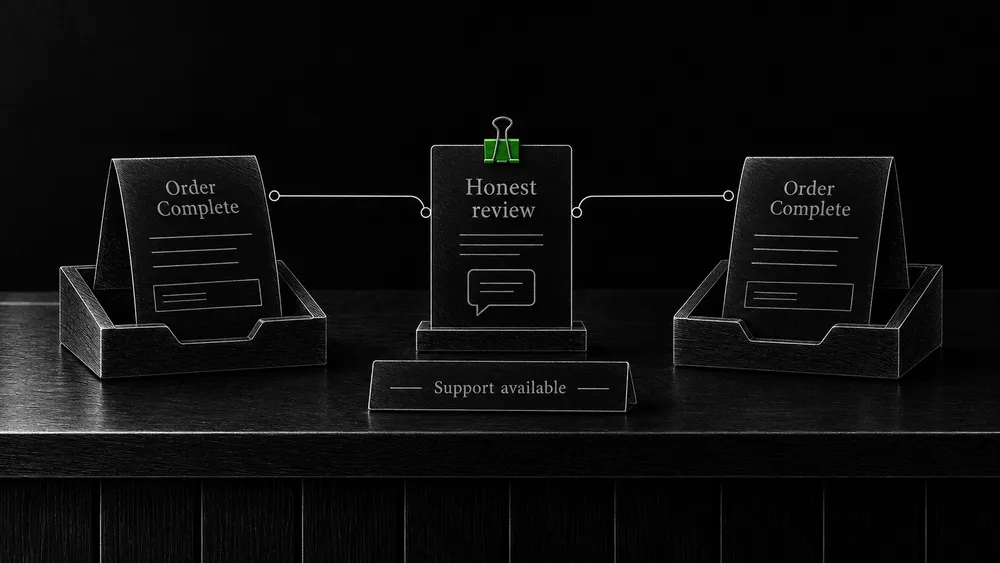
Make the request simple and neutral
Verify the review link and use a neutral invitation
Google provides a review link or QR code that can be used to invite feedback. Google’s review request guidance.
Check that the link points to the correct business profile before using it. A customer should not have to search among similarly named businesses or guess which branch is intended.
An illustrative request could read:
Thank you for choosing our business. If you would like to share your experience, you can leave an honest review using this link. Your feedback can help other customers understand what to expect.
Keep review requests voluntary and free of rewards
Insert the correct profile review link during implementation. This is sample wording, not a message sent to anyone.
Avoid requests for a five-star rating, suggested praise, or rewards. Keep support contact information available separately so customers can ask for help without making a public post.
Define ownership and approval for replies
Assign reply authority and factual review
A review response represents the business publicly. Decide who is authorized to write it, who confirms disputed facts, and which situations need the owner’s attention.
Routine appreciation may need little investigation. A complaint about a missed appointment, an incorrect charge, or a promised service requires factual review before a specific response is published.
Delegate access and review automated drafts
Use the access roles appropriate to the platform. The Google Business Profile guide explains business-controlled ownership and delegated access. Do not share a single owner’s password simply to let someone help with replies.
Automation can help collect notifications or prepare drafts, but publishing a reply should reflect the actual responsibility agreed with the owner. Do not imply that a tool can determine what happened in a customer interaction from the review text alone.
Respond to the issue rather than the rating alone
Read what the customer actually says. A short positive review may call for a brief acknowledgment. Detailed feedback may deserve a specific response. A negative review may identify an operational issue that cannot be resolved by polished wording.
| Situation | Useful response approach |
|---|---|
| Brief positive feedback | Acknowledge it naturally without adding a sales pitch |
| Detailed praise | Recognize the relevant point without inventing extra facts |
| A clear service concern | Acknowledge the issue and provide an appropriate next step |
| Facts are uncertain | Avoid arguing publicly; invite clarification through a suitable contact route |
| A possible policy violation | Preserve the evidence and assess the platform’s reporting route |
| Repeated complaints about the same issue | Investigate the service or website explanation as well as replying |
Do not repeat the same long promotional paragraph under every review. It can make the business appear inattentive even when the response is technically polite.
Handle negative feedback without exposing private information
Keep customer records out of public replies
A response should not publish customer records, private correspondence, payment details, or other sensitive information to prove a point. Keep the public reply limited to what is appropriate for public discussion.
If the situation needs investigation, invite the person to a real contact route and identify what the business can reasonably do next. Do not promise a refund, resolution deadline, or outcome that has not been authorized.
Adapt the reply to confirmed facts and available support
A neutral illustrative reply is:
Thank you for raising this concern. We would like to understand what happened. Please contact our team through the contact details on our website so we can review the issue with you directly.
This is a starting pattern, not a universal response. Adapt it to the facts and the business’s real process. A specific acknowledgment can be more useful when the owner has confirmed what happened.
Do not pressure the customer to remove or revise feedback as a condition of receiving normal assistance.
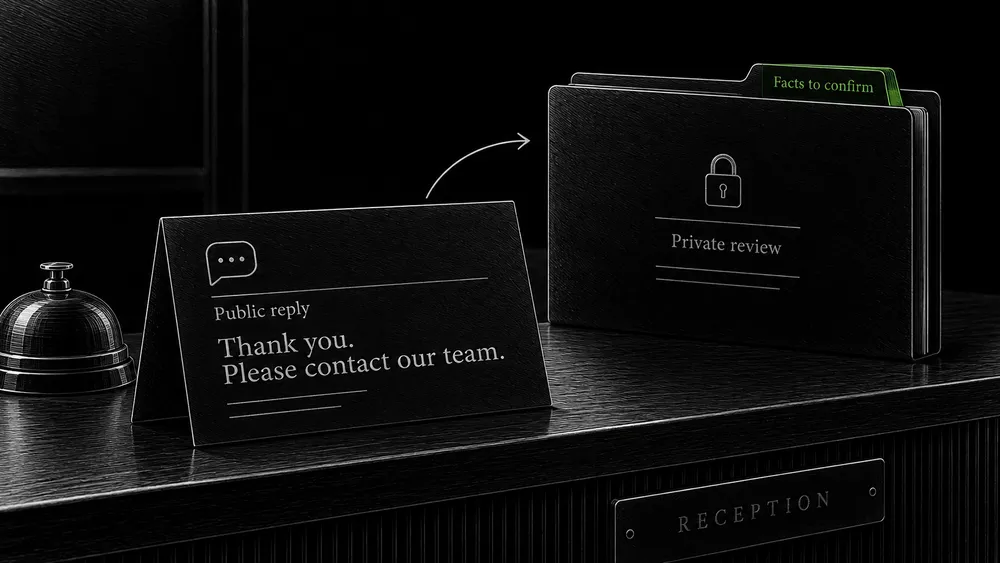
Distinguish an unfavorable review from a policy problem
Assess a review against the platform’s policy
A review can be unpleasant without violating a platform rule. Identify the actual issue before submitting a report: for example, whether it contains prohibited material or appears unrelated to a genuine experience.
Google allows businesses to flag reviews they believe violate its policies; removal is not guaranteed merely because the business disagrees with the assessment. Google’s review guidance.
Document evidence and uncertainty before reporting
Keep the review URL, relevant text, reason for concern, and available supporting evidence. Do not organize retaliatory reviews or ask others to mass-report a critic because the rating is inconvenient.
If identity or events cannot be confirmed, record the uncertainty. “We cannot locate this interaction in the available records” is different from proving the review is fake. Avoid public accusations unsupported by evidence.
Use feedback to improve the website and operation
Identify recurring gaps in expectations and delivery
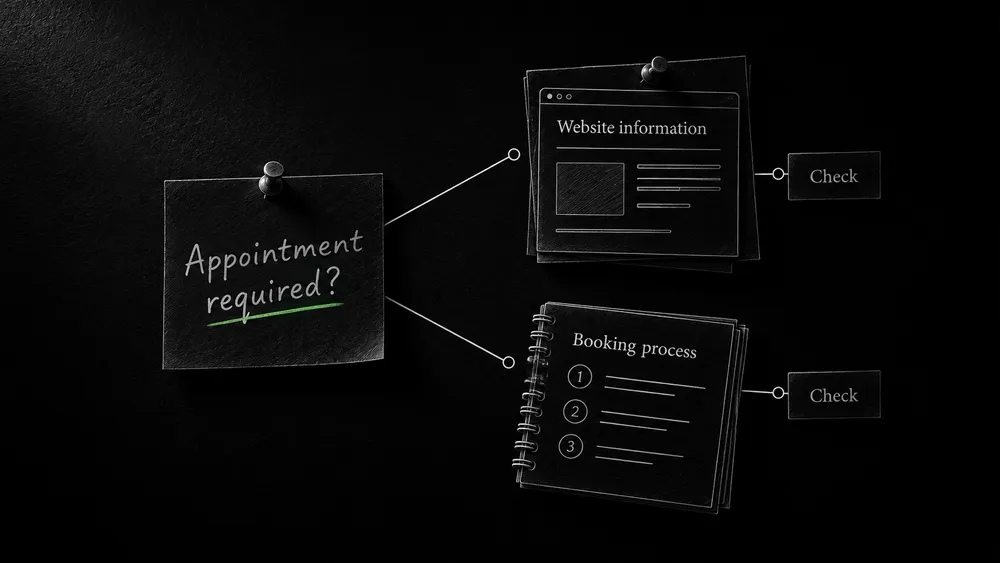
Review recurring themes periodically. Customers may misunderstand whether appointments are required, which areas are served, or what is included. Those patterns can reveal a missing explanation.
If the website is unclear, update the relevant page. If the website is accurate but the service fails to follow its stated process, the improvement belongs in the operation. Do not solve every complaint by adding a disclaimer.
Connect feedback with content and operational improvements
The local website content guide explains how to turn genuine questions into useful information. Use the measurement guide to keep feedback observations separate from lead and sales counts.
A healthy process produces more than a number. It helps future customers understand the business and helps the owner recognize where expectations and delivery diverge.
Maintain a small operational record
Track the workflow without collecting unnecessary personal data:
Review or feedback reference:
Date observed:
Topic:
Reply needed:
Facts requiring owner confirmation:
Responsible person:
Response or report status:
Operational or website improvement identified:
For requests, a minimal record can help prevent repeated messages. Keep access and retention appropriate to the business’s actual process; do not turn a simple review workflow into a publicly shared customer database.
At handover, identify who receives notifications, who responds, and where unresolved matters are recorded. A website setup does not automatically establish an ongoing response team.
Frequently asked questions
Can I offer a discount for a Google review?
No. Google prohibits incentives in exchange for reviews, including attempts to obtain revisions or removal through rewards. Ask for independent feedback instead.
Can I send the review link only to satisfied customers?
Do not use a satisfaction filter to selectively solicit positive public feedback. Establish a neutral request process for an appropriate customer group and make support available without using it to divert criticism.
Can AI write a review for a customer?
Do not manufacture customer experiences or publish them as independent reviews. The customer should describe their own experience. AI-assisted drafting of a business reply is a different task and still needs factual review and authorization.
Should I answer every review with the same template?
A template can help define tone, but the actual response should fit the feedback. Avoid repetitive promotional replies and unsupported details. Some short reviews need only a short acknowledgment.
Can every negative review be removed?
No. Assess whether it violates a policy rather than whether it is favorable. Use the platform’s reporting route for genuine concerns and do not promise removal as an ordinary reputation service.
Is ongoing review management included in a profile setup?
Only if explicitly agreed. Setup can establish links, access, and responsibilities. Monitoring feedback and publishing replies are continuing activities that need a named owner.
Organize a review process you can maintain
If profile setup or website work also needs a clear feedback route, describe how customers currently complete the service and who will handle replies. We can discuss the setup required without assuming ongoing reputation management is included.